A falling water level, damp patches around a pool, cracked grout or recurring moisture near a garden pond can all point to a leakage problem—but the visible symptom does not always reveal the true source. The leak may come from a damaged waterproofing layer, cracks in the substrate, a poorly sealed pipe penetration, a construction joint or the circulation system itself.
In Malaysia, high humidity and frequent rainfall make it especially important to inspect exposed water features and their surrounding finishes carefully. Weather can affect how quickly surfaces dry and can make it harder to distinguish rainwater, condensation and actual leakage. A lasting repair starts with diagnosis, not simply covering the wet patch.
Why Do Pools and Ponds Leak?
Swimming pools and decorative ponds are exposed to water pressure, repeated wetting, temperature changes and movement in the surrounding structure. Over time, these conditions may reveal weaknesses in the waterproofing system or in the details around fittings and joints. Common warning signs include:
· Water levels that keep dropping after normal evaporation has been considered.
· Damp or discoloured areas on the outside of a pool shell or beside a pond.
· Cracked tiles, loose finishes, hollow-sounding areas or deteriorated grout.
· Efflorescence or white mineral deposits on masonry and concrete.
· Persistent wet patches near lights, inlets, outlets, pipe penetrations or construction joints.
These signs are clues, not a final diagnosis. A leak-detection specialist may need to check pipework, fittings, joints and the pool shell separately. If the water loss is caused by a leaking circulation pipe, applying a surface coating alone will not fix the source.
Diagnose the Source Before Choosing a Repair
Before selecting a waterproofing product, identify what is leaking and why. A practical assessment should include the pool or pond structure, the visible finish, plumbing and penetrations, existing waterproofing layers, and any signs of movement or structural cracking.
1. Differentiate normal evaporation from abnormal water loss; record water levels under consistent conditions.
2. Inspect tile joints, corners, changes of plane, pipe entries and other details where movement or poor sealing may occur.
3. Check whether the substrate is sound, dry or damp as required by the product specification, and free from dust, laitance, oil and loose material.
4. Repair structural defects and detail-specific issues with the appropriate method before applying a waterproofing layer.
5. Ask a qualified contractor or technical representative to confirm the proposed system is suitable for the water exposure and the intended finish.
For design consultants and contractors, this assessment should be recorded in the repair specification. For homeowners, it helps avoid repeated patching that treats only the visible symptom.
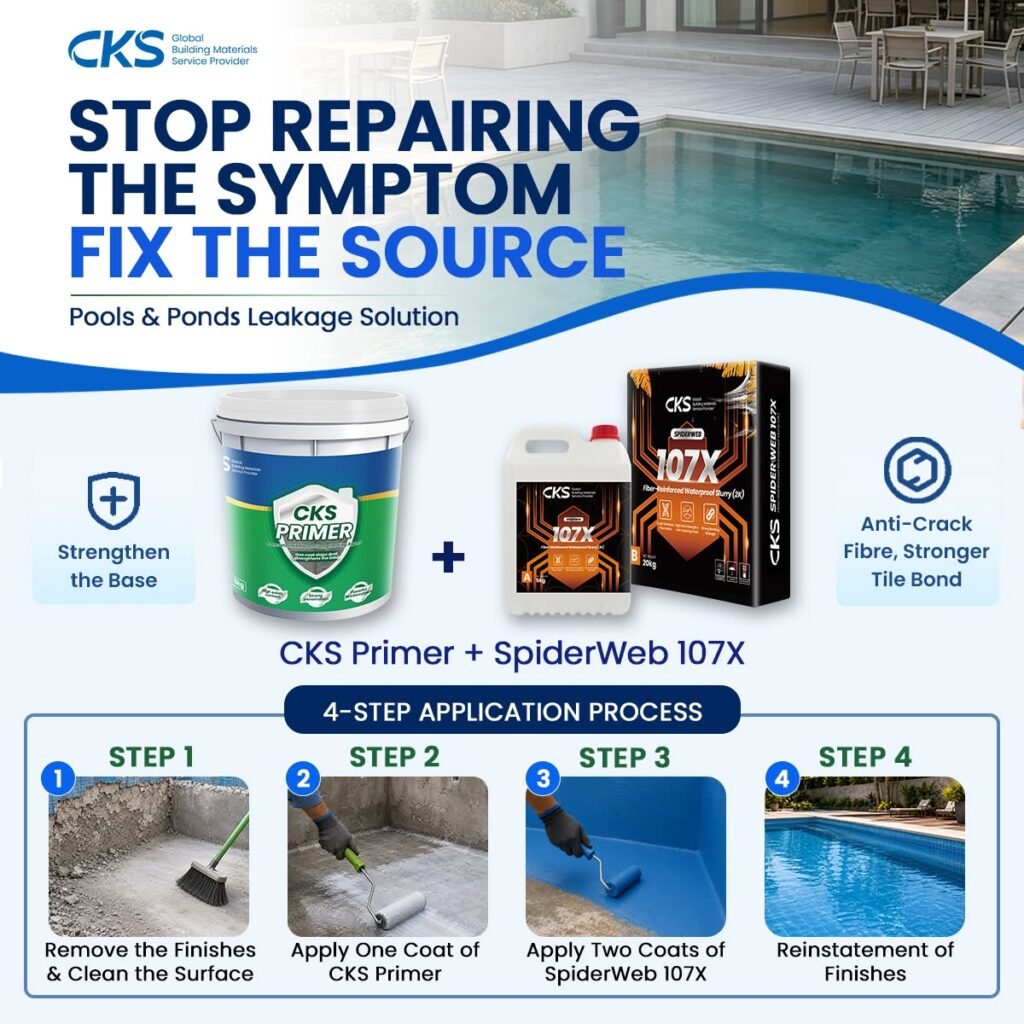
Proposed CKS Repair System: CKS Primer + SpiderWeb 107X
The proposed sequence combines substrate reinforcement with a fibre-reinforced waterproof slurry. CKS Primer is an interface-strengthening agent designed to penetrate and reinforce loose or dusty cement-based surfaces. SpiderWeb 107X is a two-component, fibre-reinforced rigid waterproof slurry intended to provide adhesion, cohesion and resistance to water penetration in its specified applications.
CKS Primer — Concrete Interface Strengthening Agent
CKS Primer is a new highpenetration bonding agent formulated with polymer emulsion and multifunctional additives. It features excellent sealing performance, strong penetration and high reinforcement strength. It is especially suitable for reinforcing loose substrates such as dusty and sandy walls, dusty floors, and surfaces after old putty removal.
· Helps bind dust and loose sand on compatible cement-based surfaces.
· Penetrates the substrate to improve surface cohesion and reinforcement.
· Ready to use and straightforward to apply.
· Specified for interface reinforcement on concrete, aerated concrete, plastering layers and loose sand-cement walls before suitable waterproofing, tile installation or self-levelling work.
SpiderWeb 107X — Fibre-Reinforced Waterproof Slurry (2K)
SpiderWeb 107X is an eco-friendly, rigid waterproof coating made with advanced fiber-reinforced technology.It combines anti-crack fibers, polymer emulsion, and selected inorganic materials to provide strong adhesion,fast build-up, and excellent waterproofing with crack resistance. Specially designed for vertical surfaces like walls, it allows direct tile installation using CKS Tile series adhesives without compromising waterproof integrity.
· Easy Application: A two-component product with a precise ratio for easy mixing and application, requiring no additional water on-site.
· High Bond Strength: Contains anti-crack fibers that effectively prevent crack propagation, ensuring resistance to hollowness and cracking.
· Excellent Crack Resistance: Reinforced fiber improves cohesion, flexural strength, and impact resistance.
· Impermeability: Provides excellent resistance to water penetration, protecting concrete from carbonation and water damage.
· Good Material Compatibility: Bonds well with the substrate and decorative layers, allowing direct application of decorative layers on the waterproofing layer.
Four-Step Application Process
The following is the proposed sequence for the CKS Primer + SpiderWeb 107X system.
Step 1 — Remove finishes and clean the surface
Remove tiles, coatings, grout or other finishes as required to expose a sound substrate. Remove dust, loose mortar, laitance, oil and other contaminants. Open and repair cracks, voids and weak areas with a suitable repair method. Treat corners, pipe penetrations, joints and changes of plane as details—not as ordinary flat surfaces.
Step 2 — Apply one coat of CKS Primer
Apply one even coat of CKS Primer to the prepared, compatible substrate. Avoid puddles and missed areas. Allow it to dry or reach the required condition in accordance with the current product instructions before proceeding.
Step 3 — Apply two coats of SpiderWeb 107X
Mix the two components at the specified ratio and apply two even coats, observing the required thickness, coverage and recoat interval. Ensure continuous coverage and pay particular attention to corners, penetrations and repaired areas. Do not add water or other materials unless the technical data sheet explicitly allows it.
Step 4 — Reinstate the finishes
After the waterproofing layer has achieved the required cure, reinstate compatible tiles or other specified finishes using the approved adhesive and method. Follow the confirmed curing and water-filling schedule before returning the pool or pond to service.
Key Checks Before Refilling the Pool or Pond
A waterproofing layer should not be judged only by how it looks when it dries. Before refilling, the project team should verify that the system has cured for the specified period, that details and terminations are complete, and that any required inspection or water-retention test has been carried out using the project-approved procedure. Do not invent a generic curing time: temperature, humidity, layer thickness and product requirements can affect readiness.
· Confirm written approval for permanent immersion and intended water conditions.
· Verify substrate repairs, corners, joints and pipe penetrations.
· Check coating coverage, thickness and intercoat timing against the product specification.
· Use compatible adhesives and finishes only where the system documentation allows them.
· Follow the approved testing and refill procedure before opening the pool or pond.
Who Should Be Involved?
Homeowners should document when and where water loss occurs and arrange a proper inspection rather than repeatedly sealing visible cracks. Waterproofing contractors should identify the source, prepare the substrate correctly, follow the approved application sequence and keep records of mixing, coverage and curing. Design consultants should confirm that the selected system matches the exposure category, structural details, finish and maintenance requirements, and should request written technical confirmation where continuous immersion is involved.
Frequently Asked Questions
How can I tell whether my pool is leaking or simply losing water through evaporation?
Track the water level under consistent conditions and inspect the plumbing, fittings and pool shell. A professional leak test may be required to distinguish evaporation from leakage.
Can CKS Primer be used as the waterproofing layer by itself?
No. CKS Primer is described as a concrete interface-strengthening and bonding agent. It is intended to prepare and reinforce suitable substrates, not to replace a specified waterproofing membrane or coating.
How many coats are included in the proposed repair sequence?
The proposed sequence is one coat of CKS Primer followed by two coats of SpiderWeb 107X.
Fix the Source with the Right Waterproofing Specification
A reliable pool or pond repair begins with identifying the source of water loss, preparing the substrate and selecting a system that is suitable for the actual exposure. CKS Primer + SpiderWeb 107X is the proposed combination for technical evaluation, but its use in continuously submerged pools and ponds must be confirmed before specification.
Contact CKS for product documentation and technical guidance. Share the project location, substrate type, visible symptoms, water exposure, existing finish and intended reinstatement so the appropriate repair system can be assessed.