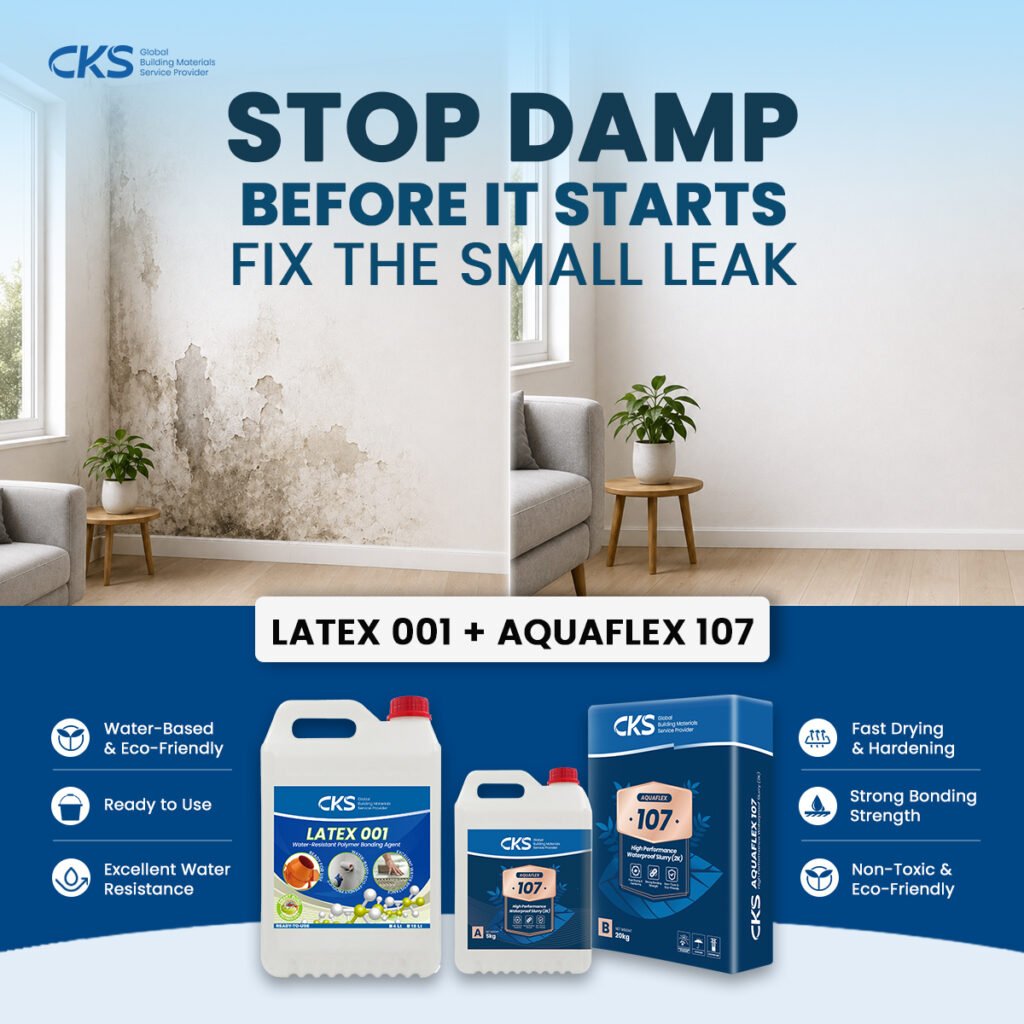
Damp patches, peeling paint, blistered plaster and recurring stains can make an interior wall look tired—and may indicate that moisture is moving through the building fabric. In kitchens, bathrooms, basements and rooms adjoining wet areas, wall seepage can damage decorative finishes and create ongoing maintenance work. The first step is to identify where the water is coming from. The right repair method depends on the cause, the condition of the substrate and whether the wall is exposed to moisture from the room side or the opposite side.
CKS recommends a two-product approach for suitable interior wall waterproofing and seepage-repair projects: Latex 001 Water-resistant Polymer Bonding Agent, followed by Aquaflex 107 High Performance Waterproof Slurry (2K). Used as part of a correctly prepared and specified system, the products are designed to support substrate bonding and form a dense waterproof layer. This guide explains when the system may be suitable, how the application sequence works and what to check before reinstating the finish.
What Causes Interior Wall Seepage?
Visible dampness is a symptom, not a diagnosis. Before selecting a waterproofing material, inspect the wall and the surrounding building elements. Common causes include:
· Plumbing leaks: supply pipes, waste pipes or concealed fittings may leak inside or behind a wall. The defective pipework must be repaired first.
· Water entering from outside: rain can penetrate cracked render, façade joints, window perimeters or damaged external coatings.
· Leakage from an adjoining wet area: a shower, bathroom, kitchen or balcony may allow water to pass through a poorly sealed junction or defective waterproofing layer.
· Ground moisture or water pressure: basement and below-ground walls may be affected by moisture moving through concrete or masonry. The pressure and source of water must be assessed before choosing a repair method.
· Condensation: poor ventilation, cold surfaces and high indoor humidity can cause surface moisture that may resemble leakage. Waterproofing alone will not correct a condensation problem.
Look for patterns rather than relying on one stain. Dampness that worsens after rain may point to an external entry point; a localised wet area near plumbing may indicate a pipe leak; recurring moisture near a shower or floor junction may relate to wet-area waterproofing. Where the cause is unclear, obtain an assessment from a qualified contractor or building professional before covering the wall.
When Is the Latex 001 + Aquaflex 107 System Appropriate?
The CKS system is intended for waterproofing and seepage-prevention work on suitable mineral wall substrates, including interior walls in wet areas and selected repair situations where access to the water-entry side is limited. Latex 001 is a water-based polymer bonding agent that can be used in the specified application or incorporated into cement mortar at the prescribed ratio. Aquaflex 107 is a two-component waterproofing slurry that forms a dense composite coating after application.
This system should not be treated as a universal fix for every damp wall. Active plumbing leaks, moving structural cracks, failed drainage and persistent external water entry must be addressed at their source. For below-ground or negative-side applications, assess the substrate, moisture condition and water pressure carefully, and confirm suitability against the current product data sheet and project specification. If the wall is structurally unsound or has significant cracking, repair and professional assessment may be needed before waterproofing.
Recommended CKS Waterproofing System
1. Latex 001 — Water-resistant Polymer Bonding Agent
Latex 001 is formulated with a special polymer waterproof emulsion for construction. As a water-based material, it is designed to support good water retention and low shrinkage. When added to cement mortar in the specified proportion, it forms polymer-modified cementitious mortar that can create a rigid, impermeable layer. In the recommended repair sequence, Latex 001 is used at the prepared substrate stage in accordance with the approved method statement and current product instructions.
Key benefits include water-based, eco-friendly formulation; stable polymer performance; improved bonding with the substrate and compatible decorative layers; and water resistance. The product is listed for exterior-wall plastering, kitchens, bathrooms, basements, pools, porous masonry surface treatment, building repairs and selected negative-side waterproofing applications. For an interior wall project, confirm the exact application method and any required mortar mixing ratio before work begins.
2. Aquaflex 107 — High Performance Waterproof Slurry (2K)
Aquaflex 107 is a two-component waterproofing slurry made from a polymer waterproof emulsion, inorganic materials and selected aggregates. It combines polymer characteristics with the durability of inorganic materials to form a dense, integrated coating on a properly prepared base. Its stated features include fast drying and hardening, strong bonding strength, low shrinkage, anti-cracking and anti-hollowing performance, and excellent resistance to water penetration.
Aquaflex 107 is specified for waterproofing and moisture protection on interior and exterior walls, kitchens, bathrooms, floors, pools and selected underground projects. For interior wall repairs, the coating should be applied evenly and continuously, with particular attention to corners, junctions and service penetrations. Follow the current technical data sheet for component ratio, mixing, coverage, coat interval, curing and finish compatibility; do not estimate these values from appearance alone.
Key Benefits of the Combined System
Improved bonding to a prepared substrate
A waterproof coating performs only as well as the surface beneath it. Latex 001 supports bonding at the prepared substrate stage, while Aquaflex 107 provides the waterproof coating. Removing weak paint, hollow plaster, dust and other contaminants helps the system make contact with a sound base instead of bonding to a failing finish.
A continuous layer to resist water penetration
Aquaflex 107 is designed to form a dense composite waterproof layer. Correct coverage and continuity are important: pinholes, missed areas or poorly treated junctions can become weak points. The product is intended to help reduce seepage through suitable substrates, but it cannot compensate for unresolved leaks or unsuitable structural conditions.
A practical repair sequence
The four-step sequence—remove finishes, prepare the substrate, apply Latex 001, then apply two coats of Aquaflex 107 before reinstating the finish—gives contractors a clear workflow. The actual waiting periods, thickness and coverage should always follow the latest product instructions and the approved project specification.
Water-based, user-conscious material selection
Both products are described as water-based or environmentally considerate materials. Use them as directed, follow the safety information on the product label and safety data sheet, and provide suitable ventilation and personal protective equipment during application.
Application Procedure: Four Essential Steps
Step 1 — Remove the finish and clean the substrate
Remove paint, wallpaper, tiles or other finishes in the affected area as required to expose a sound, stable base. Scrape away loose plaster and remove dust, grease, laitance and other contaminants. Inspect the wall for cracks, holes, hollow areas and damaged joints. Repair defects with a compatible repair material and allow the repairs to reach the condition required by the project specification. If the wall remains wet because a leak is active, stop and resolve the source before proceeding.
Step 2 — Apply one coat of Latex 001
Apply one coat of Latex 001 as specified for the selected system and substrate. Use the application method and dilution or mixing instructions stated in the current technical data sheet; do not add water or cement unless the product instructions call for it. Where Latex 001 is to be incorporated into cement mortar, use the specified proportion and mix thoroughly. Allow the layer to reach the condition required before applying the next material.
Step 3 — Apply two coats of Aquaflex 107
Mix the two components of Aquaflex 107 in the manufacturer’s stated ratio until the mixture is uniform. Apply the first coat evenly to the prepared surface, ensuring that corners, wall-to-floor junctions and penetrations are not missed. After the first coat has reached the required condition, apply the second coat to achieve continuous coverage. Where permitted by the product instructions, applying the coats in different directions can help the installer check coverage. Observe the specified thickness, coverage rate and interval between coats.
Step 4 — Reinstate the finish
Do not reinstall decorative finishes immediately simply because the surface looks dry. Allow the waterproofing layer to cure for the period stated in the product data sheet and confirm that the proposed finish is compatible with the system. Reinstall plaster, tiles, paint or other finishes using compatible materials and methods. Protect the waterproofing layer from damage during subsequent work, and complete any specified inspection or water test before closing up the area.
Frequently Asked Questions
Can this system fix every type of damp interior wall?
No. It is a waterproofing option for suitable wall substrates, but the cause of dampness must be identified first. Plumbing leaks, condensation, structural movement and external water entry may require different or additional corrective work.
Why use Latex 001 before Aquaflex 107?
Latex 001 supports bonding at the substrate stage and can modify cement mortar when used at the specified ratio. Aquaflex 107 is the two-component waterproofing slurry that forms the main waterproof coating in this system.
How many coats are required?
The supplied application sequence specifies one coat of Latex 001 followed by two coats of Aquaflex 107. Confirm the application method, coverage, thickness and coat intervals against the latest technical data sheet and project specification.
Can the products be applied over peeling paint or loose plaster?
No. The specified sequence begins by removing the finish and cleaning the substrate. Loose, contaminated or unsound layers can prevent reliable adhesion and should be removed before repair.
Can the system be used on the negative side of a wall?
Latex 001 is listed for selected negative-side waterproofing uses, and Aquaflex 107 is listed for selected underground waterproofing applications. However, negative-side work depends on water pressure, substrate condition and project details. Obtain a site assessment and verify suitability before specifying the system.
Plan Your Interior Wall Waterproofing Repair with CKS
A lasting repair starts with identifying the source of moisture and preparing a sound substrate. For suitable interior wall waterproofing projects, CKS Latex 001 and Aquaflex 107 provide a coordinated approach to substrate bonding and waterproof coating application. Consult the current product data sheets and project specification for detailed application requirements, and work with a qualified contractor where the source of leakage or site conditions are uncertain.