A strong waterproofing or finishing system does not start from the top coat. It starts from the base. When the substrate is dusty, weak, alkaline, uneven or poorly bonded, the following coating, mortar, tile adhesive or waterproofing layer may lose adhesion over time. This can lead to hollowing, peeling, cracking or repeated repair work.
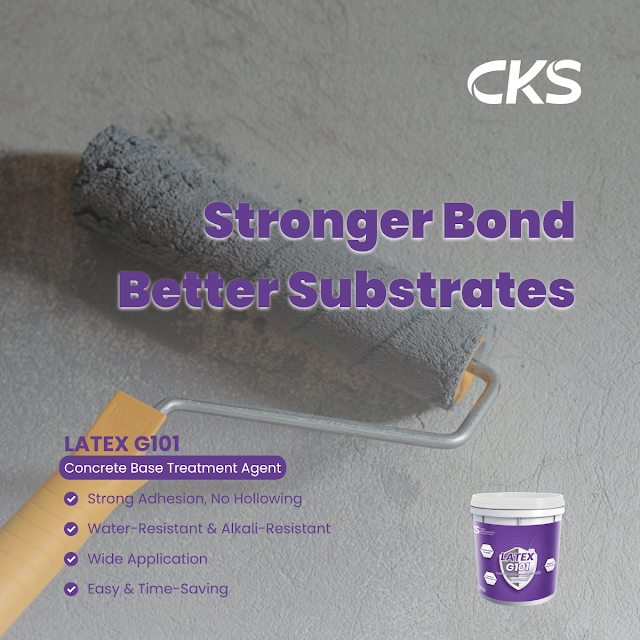
LATEX G101 Concrete Base Treatment Agent (2K) is designed for this important preparation stage. As a high-performance, two-component interface treatment material, LATEX G101 helps reinforce the surface, improve bonding strength and create a more reliable base for subsequent materials.
What Is LATEX G101?
LATEX G101 is a two-component interface treatment material for concrete, mortar surfaces and various lightweight partition walls. It is used before the next layer of material is applied, especially where the base requires stronger adhesion, better surface integrity and improved moisture resistance.
Instead of treating substrate preparation as a quick cleaning step, LATEX G101 helps turn the base into a more suitable bonding surface. This is especially useful for exposed concrete substrates, aerated concrete, plastered surfaces and brick-concrete walls.
Why Interface Treatment Matters
In many repair and renovation projects, the visible problem is often a leaking roof, damp wall, hollow tile or peeling coating. However, the real cause may begin at the interface between the substrate and the next material layer. If this interface is weak, even a good finishing material may not perform as expected.
A proper base treatment agent helps improve the connection between old and new materials. It supports better adhesion, reduces the risk of hollowing and helps create a cleaner, stronger and more stable working surface before waterproofing, coating or wall-finishing work begins.
Key Features of LATEX G101
1. Strong Adhesion, No Hollowing
LATEX G101 is designed to provide remarkable interfacial reinforcement and high bonding strength. By improving the adhesion between the substrate and subsequent materials, it helps reduce the risk of hollowing and separation.
2. Water-Resistant and Alkali-Resistant
Concrete and mortar substrates can present moisture and alkalinity challenges. LATEX G101 provides water-resistant and alkali-resistant performance, making it suitable for base treatment before waterproofing, coating or other finishing systems.
3. Wide Application
The product is suitable for interface treatment on concrete, aerated concrete, plastered surfaces and brick-concrete walls. It can also be used on exposed concrete substrates where adhesion enhancement is required.
4. Easy and Time-Saving Application
LATEX G101 can be applied with a roller or brush. After proper mixing, it forms a uniform coating layer on the substrate, helping contractors complete the preparation stage efficiently before moving to the next process.
Where Can LATEX G101 Be Used?
LATEX G101 is recommended for interface treatment and substrate reinforcement in the following areas:
- Concrete substrate interface treatment
- Aerated concrete interface treatment
- Plastered surface treatment
- Brick-concrete wall interface treatment
- Exposed concrete substrate treatment before subsequent material application
- Base preparation before waterproofing, coating, mortar repair or wall-finishing work, where stronger adhesion is required
It is especially useful when the project requires stronger surface adhesion and better compatibility between the base and the next material layer.
How to Apply LATEX G101
| Step |
Process |
Key Points |
| 1 |
Substrate Preparation |
The substrate must be flat, firm, clean and free from hollowing. Remove dust, oil stains, contaminants and loose materials. Dry substrates must be pre-wetted before application. |
| 2 |
Mixing |
Mix according to the specified ratio: Liquid : Powder = 1 : 2. Pour the liquid component into a mixing bucket first, then gradually add powder while stirring. Mix until uniform and lump-free. Let it sit for 3 minutes, then stir again before use. Use the prepared material within 1 hour. |
| 3 |
Application |
Apply 1-2 even coats to the substrate using a roller or brush. Ensure the coating is fully dry and cured before proceeding to the next step. |
Why Choose LATEX G101 Before Waterproofing or Finishing?
Waterproofing performance depends not only on the waterproofing material itself, but also on the condition of the surface underneath. LATEX G101 helps address the base first, so the next layer has a better surface to bond with.
When the substrate is properly prepared, the overall system is more stable. This helps contractors reduce rework, improve application consistency and build a stronger foundation for subsequent construction steps.
Important Application Notes
- Do not apply on loose, dusty, oily or hollowing substrates without proper cleaning and repair.
- Pre-wet dry substrates before application.
- Follow the Liquid : Powder = 1 : 2 mixing ratio.
- Use the mixed material within 1 hour.
- Allow the coating to fully dry and cure before applying the next material layer.
- Use LATEX G101 as an interface treatment and base reinforcement material; it should be matched with the correct waterproofing or finishing system for the final application area.
Frequently Asked Questions
Can LATEX G101 be used on concrete surfaces?
Yes. LATEX G101 is suitable for interface treatment on concrete and exposed concrete substrates to improve adhesion before subsequent material application.
Is LATEX G101 suitable for aerated concrete?
Yes. It is suitable for interface treatment on aerated concrete, plastered surfaces and brick-concrete walls.
What is the mixing ratio of LATEX G101?
The specified mixing ratio is Liquid : Powder = 1 : 2. Pour the liquid component first, then gradually add powder while stirring continuously.
How long can the mixed material be used?
The prepared material must be used within 1 hour.
How many coats should be applied?
Apply 1-2 even coats with a roller or brush, depending on substrate condition and project requirements.
When can the next material layer be applied?
Proceed to the next step only after the LATEX G101 coating is fully dry and cured.
Conclusion
LATEX G101 Concrete Base Treatment Agent (2K) is designed for one of the most important stages of construction and repair work: preparing the base. With strong adhesion, interfacial reinforcement, water and alkali resistance, wide application and easy roller or brush application, it helps create a stronger surface before waterproofing, coating or finishing work begins.
For projects that require better bonding and a more reliable substrate, LATEX G101 helps ensure that every next layer starts from a stronger base.
Need to prepare concrete, mortar or wall surfaces before waterproofing or finishing? Contact CKS to choose the right substrate treatment and waterproofing system for your project.