In modern architectural design, flat roofs are widely employed in commercial buildings, industrial facilities, large public structures, and residential projects due to their advantages of high space utilisation, sleek modern aesthetics, and ease of equipment installation.
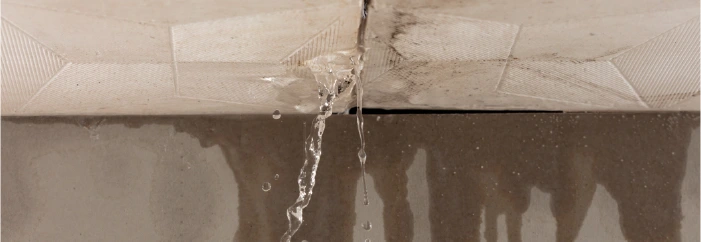
However, flat roofs are inherently challenged: their low drainage gradient promotes water pooling, and their constant exposure to harsh environments—including UV radiation, ozone, extreme temperature cycles, and structural movement—makes the seams of traditional waterproofing membranes vulnerable weak points. This leads to a persistently high risk of leaks.
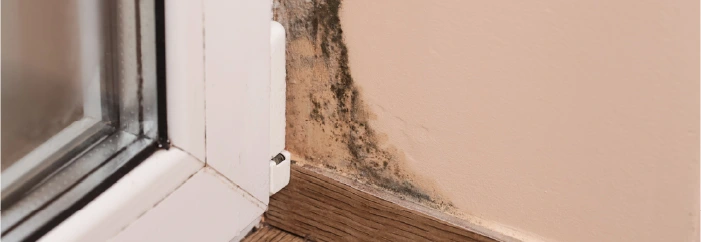
These leaks not only compromise the building's structural integrity and disrupt interior functionality but also result in frustrating and costly repeated repairs.
Addressing this critical industry challenge, CKS leverages its deep expertise in building material systems to introduce a revolutionary solution: the CKS High-Elasticity Spray-Applied Waterproofing System. This innovative system utilizes advanced material technology and intelligent application processes to create a seamless, durable, and reliable monolithic barrier for flat roofs, eliminating leakage risks for good.
As the ancient strategist Sun Tzu wisely stated, "Know yourself and know your enemy, and you will never be defeated." To completely resolve flat roof leakage, one must first thoroughly understand its root causes.
1.Water Ponding & Erosion:Flat roofs typically have a gradient of less than 5%, leading to poor drainage and water accumulation. Under hydrostatic pressure, this standing water relentlessly penetrates the waterproofing layer, exploiting any minor crack or pore, leading to leaks. Furthermore, it accelerates material aging.
2.Thermal Stress Damage: Roofs endure the most extreme temperature fluctuations on a building. Summer sun can heat surfaces beyond 70°C, while winter cold can plunge them to -20°C. This severe thermal expansion and contraction causes cracks in rigid waterproofing materials and stresses the seams of flexible membranes, making them potential failure points.
3.UV & Ozone Degradation: Constant exposure to ultraviolet radiation and ozone breaks down organic polymers. This causes asphalt membranes to become brittle and lose elasticity, and polyurethane coatings to chalk and crack.
4.Structural Movement & Substrate Cracks: Inevitable building movement occurs due to foundation settlement, changing loads, and material shrinkage. This movement transfers to the roof. If the waterproofing layer lacks sufficient elongation and crack-bridging capabilities, it will crack accordingly.
5.Complex Detail Challenges: Flat roofs feature numerous intricate details: inside/outside corners, pipe penetrations, drain outlets, and parapet wall junctions. These are areas of high stress and construction difficulty. Traditional membranes require extensive cutting and seaming here, making it hard to create a continuous seal and turning these details into high-risk leakage zones.
6.High Maintenance Costs: Traditional repair methods are invasive ("open-heart surgery"), requiring precise leak location. The process is complex, highly disruptive to normal operations, and often provides only a temporary fix, leading to a costly cycle of repeated repairs.
The CKS High-Elasticity Spray-Applied Waterproofing System is the systematic solution engineered to tackle these six core challenges.
Its core technical advantages are demonstrated in:
100% Seamless, Monolithic Membrane:
The spray-applied process creates a continuous, joint-free membrane over substrates of any shape. It彻底消除了 (completely eliminates) the weakest link – seams – offering unparalleled performance on complex roofs with numerous details.
2.Extreme Elasticity & Elongation: With an elongation at break exceeding 1000%, the system effectively bridges substrate cracks (up to 3-5mm wide) caused by thermal movement or settling, demonstrating superior adaptability.
3.Superior Adhesion: It forms a powerful, "skin-like" bond with various substrates (concrete, metal, asphalt), preventing delamination and peeling.
4.Excellent Weather Resistance: Formulated with UV and ozone resistance, it demonstrates exceptional long-term durability in accelerated aging tests, far outperforming the service life of traditional materials.
5.Broad Temperature Tolerance: It maintains its elasticity and physical properties within a wide range of -40°C to 80°C, remaining crack-free and stable.
6.Revolutionary Application Efficiency:
Mechanical spraying allows for coverage exceeding 2,000 m² per day per unit – 5 to 10 times faster than installing traditional membranes. This drastically reduces project timelines, making it ideal for large-scale roofs.
Unmatched Adaptation to Complex Substrates:
The spray application offers an unbeatable advantage for irregular surfaces, pipes, drains, parapet walls, and other complex details. It provides perfect, uniform-thickness encapsulation without seams, ensuring
360° comprehensive protection
8.Environmental & Energy-Saving Benefits:
This is a solvent-free, 100% solids system with zero VOC emissions, ensuring safe and environmentally friendly application. Furthermore, the closed-cell foam layer provides excellent waterproofing and insulation (low thermal conductivity), effectively reducing building energy consumption and enhancing rooftop energy efficiency.