Building leaks compromise aesthetics and structural integrity. Selecting and correctly applying suitable waterproofing coatings is paramount for structural protection. This guide systematically covers coating classifications, performance characteristics, and application essentials to help you achieve watertight security.
Ⅰ.Core Classifications & Characteristics of Building Waterproofing Coatings
Understanding classifications enables precise material selection. Principal types include:
1.Polyurethane (PU) Waterproofing Coatings
Characteristics:High strength, excellent elasticity, abrasion resistance, seamless membrane.
Forms:Single-component (moisture-curing), Two-component (chemical-curing).
Applications:Roofs, basements, bridges, water tanks – critical waterproofing zones.
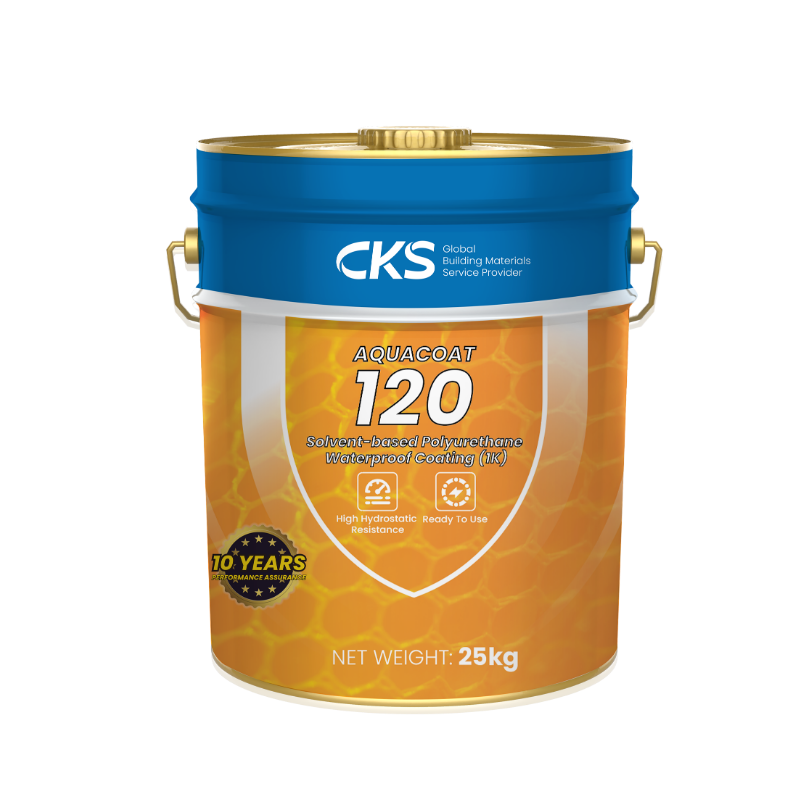
Aquacoat 120 Solvent-based Polyurethane Waterproof Coating
2.Polymer-Modified Cementitious Coatings (JS Waterproof Coatings)
Characteristics:Good leveling property,seamless & elastic,resistant to prolonged water exposure.
Forms:Two-component (liquid + powder).
Applications:Swimming pools,fish ponds,drinking water tanks, landscape ponds, and fire-fighting pools.
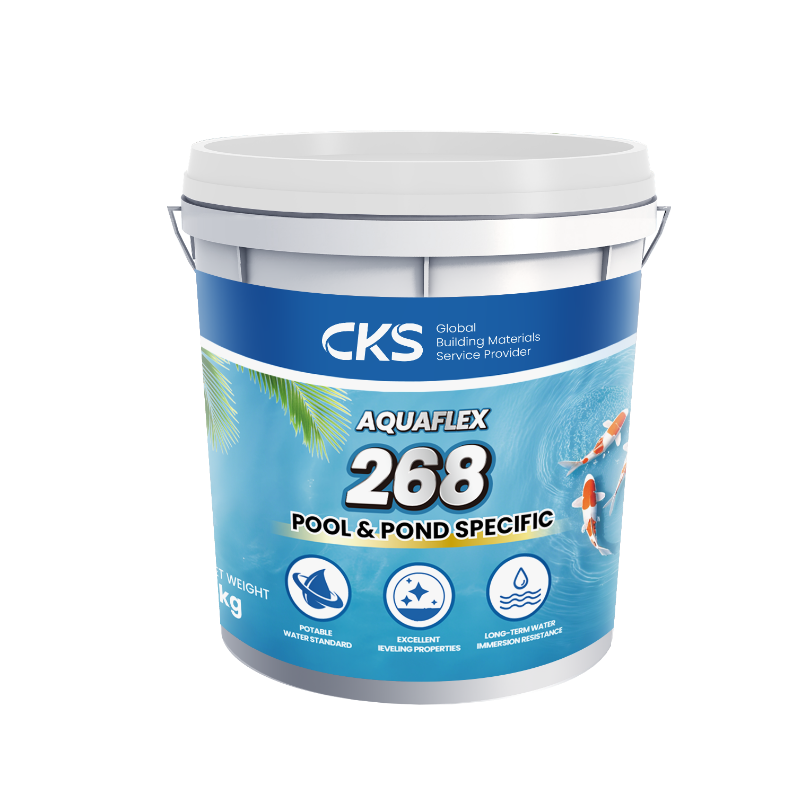 Aquaflex 268 Water Resistant Polymer Cementitious Waterproof Coating
To learn more, please check out this introduction article:《【Product Spotlight】 Aquaflex 268:Waterproofing for Every Water Project》
3.Acrylic Waterproofing Coatings
Characteristics:Eco-friendly, good elongation, excellent weather resistance, easy application.
Forms:Single-component (water-emulsion).
Applications:External walls, roofs, lightweight walls, roof repairs/refurbishment; suitable for direct exposure.
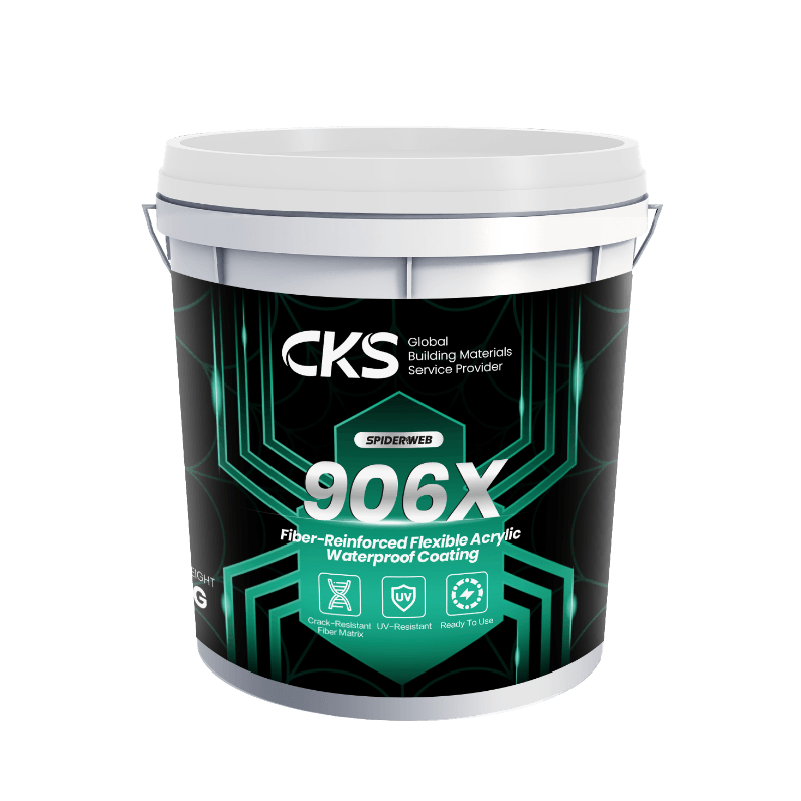 SpiderWeb 906X Fiber-Reinforced Flexible Acrylic Waterproof Coating
4.Bituminous Waterproofing Coatings
Characteristics:Effective waterproofing, low cost, corrosion resistance.
Forms:Water-based , Solvent-based.
Applications:Basements, non-exposed roofs, foundation protection.
5.Epoxy Waterproofing Coatings
Characteristics:Exceptional strength, ultra-high adhesion, chemical/corrosion resistance, abrasion resistance.
Forms:Two-component.
Applications:High-strength requirements (floors, tank linings), corrosion protection, or as a primer/sealer.
Ⅱ.Key Performance Indicators: Assessing Coating Quality
Evaluate these critical performance indicators to ensure suitability:
1.Solid Content: Indicates the proportion of film-forming solids. Higher solids yield greater coverage, thicker films, and enhanced waterproofing.
2.Tensile Strength & Elongation at Break:
Tensile Strength: Resistance to mechanical stress. Higher strength improves crack-bridging capability.
Elongation at Break:Percentage stretch before rupture. Higher elongation accommodates substrate movement/cracking.
3.Impermeability (Water Resistance):The fundamental metric! Ability to withstand hydrostatic pressure (typically 0.3MPa/0.4MPa for 30 minutes without leakage).
4.Adhesion Strength:Bond strength to substrates (concrete, mortar). Poor adhesion causes blistering/delamination. Damp-substrate adhesion is crucial.
5.Water Immersion Resistance:Long-term performance retention (impermeability, strength, elongation) when submerged.
6.Weather Resistance:Resilience against UV, thermal cycling, rain, erosion. Critical for exposed coatings (e.g., Acrylic, some PU).
7.Drying/Curing Times:
Surface Dry (Touch Dry):Time until surface is non-tacky.
Full Cure:Time to achieve complete film integrity. Affects application scheduling.
8.Environmental Performance:VOC content is key. Water-based coatings (JS, Acrylic) generally outperform solvent-based types (some PU, bituminous) in eco-toxicity.
Ⅲ.Scientific Application Protocol: Essential Steps for Success
Optimal performance requires meticulous application:
1.Substrate Preparation (Critical!):
Sound & Level:Remove loose particles, dust, oil, release agents. Repair hollows/spalling.
Clean & Dry: Substrate must be dry (moisture content per product spec, typically ≤9%). Damp substrates (suitable for JS etc.) must be free of standing water.
Detail Work: Pre-treat corners, pipe penetrations, drains, cracks with sealant/repair mortar, forming smooth radii. Reinforce using fibreglass mesh/fabric.
2.Material Preparation:
Verify:Check product type, quantity, expiry date.
Mixing:For two-component products (JS, PU, Epoxy), mix precisely to manufacturer’s ratio using a mechanical stirrer. Use within pot life. Stir single-component products thoroughly.
3.Application:
Tools: Brushes, rollers, or spray equipment. Ensure cleanliness.
Multiple Thin Coats: Apply thin, even coats. Thick coats risk cracking/blistering. Typically 2-3 coats required.
Direction & Intervals: Apply successive coats perpendicularly (cross-coating technique). Ensure prior coat is “fully cured”before recoating (refer to datasheet, typically 4-8+ hours).
Film Thickness: Achieve specified total Dry Film Thickness (DFT) (usually ≥1.5mm). Use a wet film gauge.
Uniformity: Ensure consistent coverage without misses or build-up.
4.Detail Reinforcement: Apply extra coats or embed reinforcement fabric at critical details (pipes, corners, cracks) for added thickness.
5.Protection:
Protect uncured film (typically 24-72 hours) from foot traffic, sharp objects, standing water, or damaging subsequent work.
Avoid damaging the membrane during follow-on trades (tiling, rendering).
6.Water Ponding Test:
Timing: Conduct after full cure (typically 3-7 days curing).
Method:Seal drains, impound ≥20mm water depth for ≥24 hours.
Inspection: Check below (ceilings, pipe surrounds, junctions) for leaks/dampness. No leakage = pass.
Ⅳ.Safety & Environmental Compliance
Ventilation:Essential, especially with solvent-based products (some PU, bituminous).
PPE: Wear masks, gloves, eye protection. Avoid skin contact.
Fire Safety: Solvent-based products are flammable. Prohibit ignition sources/smoking. Control static.
Waste Disposal: Dispose of waste/containers per local environmental regulations. Never pour to drain.
Ⅴ.Purchasing Guidance Summary
1.Define Needs: Match type to location (roof, bathroom, basement), exposure (external/internal), substrate condition (dry/damp), budget.
2.Check Certifications: Source branded products with valid test reports (e.g., SIRIM), eco-labels (e.g., EU Ecolabel, A+). Avoid uncertified products.
3.Review Performance: Scrutinise datasheets for key metrics (impermeability, elongation, adhesion, VOCs) against standards and project needs.
4.Seek Expertise: Consult waterproofing specialists or technical reps for complex projects or unusual details.
Selecting appropriate waterproofing coatings and adhering to rigorous application standards is fundamental for durable, leak-free structures. Understanding material properties, key performance criteria, and correct procedures builds truly reliable waterproofing barriers. Engage professional waterproofing contractors for complex requirements.
CKS is a supplier of building materials established in 1996 that ranks among the 100 top listed companies of its kind in the world. As such, it is worthy of long-term trust. Its scope of business covers a number of sectors, which include architectural water-proofing, building repair, rainwater management, photovoltaic energy, building mortar powder and vibration isolation. CKS offers integrated solutions that find widespread applications in multiple fields, including residential real estate, municipal venues, rail transit, industrial parks, bridges, tunnels and pipeline corridors.
If you need help with building materials, please feel free to contact CKS!